
Shallow Limestone Bedrock Heaves Headstones Near the Olentangy
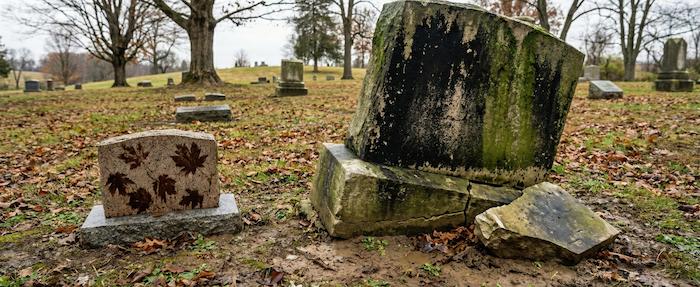
The Olentangy River splits Delaware County almost exactly down the middle, and it splits the ground underneath it too. West of the river, Delaware Limestone sits close to the surface, sometimes just a few feet down. Where that bedrock rises close enough, the clay soil above it can't drain the way it would over deeper glacial till. It swells after rain and pulls back tight during dry spells, and a headstone base set into that shallow-bedrock clay near the river rocks with every cycle, since there's nowhere for the swelling clay to go but up against the stone.
Cemeteries closer to Delaware's river corridor tend to show this first. Older upright markers lean noticeably more than newer ones set on modern, deeper footings, since older installations rarely dug down far enough to clear the shallow bedrock zone. Headstone cleaning services near me searches from these older river-adjacent plots often start once the lean becomes visible. Grime usually gets noticed second, if at all. Tending resets affected bases on a compacted gravel bed that gives the clay room to move without pushing on the stone directly. Anything beyond a straightforward reset, like a cracked or split base, falls under headstone repair and restoration.
Limestone Groundwater Leaves a Mineral Crust on Headstones
Groundwater moving through Delaware's limestone bedrock picks up dissolved calcium along the way, and that mineral-heavy water works its way up through a headstone's base by capillary action. As it evaporates off the stone's surface, it leaves behind a chalky white crust — mineral scale, not dirt, and a simple rinse doesn't touch it. Marble markers on the west side of the river show this most, since the same calcium carbonate that makes up the stone gives the deposit something similar to bond to. Granite resists it better, though even granite bases can pick up a faint white ring right where the mineral-rich water meets the surrounding grass.
Bronze veterans' plaques in the same plots pick up a similar white haze where mineral-rich water drips across the metal. Tending removes the scale with a chelating agent formulated to break down mineral buildup without touching the stone's original polish, and cleans and restores bronze grave markers using the same approach on the metal.
Ohio Shale Pyrite Leaves Rust Stains East of the River
East of the Olentangy, limestone gives way to Ohio Shale, and that shale carries small pyrite concretions throughout it. When pyrite is exposed to air and moisture, it oxidizes and releases iron, and that iron shows up as rust-colored streaks bleeding down the face of a nearby headstone. The staining tends to follow whatever path water runs down the stone, so it often cuts straight across engraved lettering and makes the carving harder to read. Newer headstones set well back from any exposed shale or fill material generally avoid this, which is one reason two markers of similar age can look completely different a few rows apart.
"Somehow I trusted that Tending would do a great job on my great great grandmother's very old and darkened headstone. They are the real deal. The work was done beautifully and it was so touching to see the headstone clean and readable again. Do not hesitate to hire Tending. They will bring your loved one's resting place shine again. "
— Louise Rosen Byer, Columbus, Ohio
An iron stain like this needs a different approach than ordinary grime or biological growth. It calls for a rust-specific treatment before any polishing happens. Skip that step and the stain just gets pushed deeper into the pores. Tending treats the staining first, then recuts and repaints any lettering the rust has obscured, following headstone lettering repair standards for the engraving work itself.
Service Costs in Delaware
Every visit is priced through Tending's online calculator once the monument type and care plan are chosen, with no in-person inspection needed beforehand. A maintenance plan can be layered on for cemeteries near the river that need more frequent checks, especially where mineral scale or iron staining tends to return within a year or two.

- Base resetting and stabilization: leveling a heaved or tilted monument near shallow bedrock.
- Mineral scale removal: chelating treatment for calcium crust on stone and bronze.
- Iron stain and lettering repair: rust treatment and recutting of obscured engraving.