Mother's Day Is About Celebration – And Remembrance
Meaningful ways to honor a mother who has passed include visiting her gravesite with her favorite flowers, cooking a treasured family recipe, gathering with family to share stories, or creating a small home memorial with a photo and candle. For families who live too far to visit in person, Tending can send a specialist to clean and restore the headstone and deliver a photo report before Mother's Day.
Most people think of Mother's Day as a day of celebration — brunch reservations, flower deliveries, handmade cards from the kids. And it is. It's one of the most celebrated holidays in America, with 84% of U.S. adults planning to participate.
But here's the part that doesn't make it into the commercials: for millions of Americans, Mother's Day is also a day of grief.

A holiday born from loss
What most people don't know is that Mother's Day was never meant to be a shopping holiday. It was created by Anna Jarvis, who organized the first Mother's Day church service in 1908 — three years after her own mother's death. The whole point was to honor a mother who was gone. Jarvis started the tradition of wearing white carnations to honor deceased mothers and red carnations for living ones. The original Mother's Day was, at its core, a day of remembrance.
Over a century later, that meaning hasn't disappeared — it's just been pushed to the background.
The numbers behind the grief
By age 50, roughly half of Americans have lost their mother. That's tens of millions of people who wake up on the second Sunday of May and feel the absence rather than the celebration. Even among 30-year-olds, about 17% have already lost their mothers.
For these families, the holiday looks different. Many choose to visit gravesites, bringing favorite flowers as a way to honor her memory. Others cook a favorite family recipe, look through old photos, or simply sit with the memory. Mother's Day is one of the most popular days for cemetery visits across the country, alongside Memorial Day and personal anniversaries.

How people honor mothers who are gone
There's no single right way to spend Mother's Day after loss. But some traditions have become meaningful for many families:
- Visiting the gravesite and placing flowers — the ones Mom loved most.
- Cooking her signature dish. Few things bring a mother's presence back like the smell of her cooking.
- Gathering with family to share stories and memories — in person or over a video call.
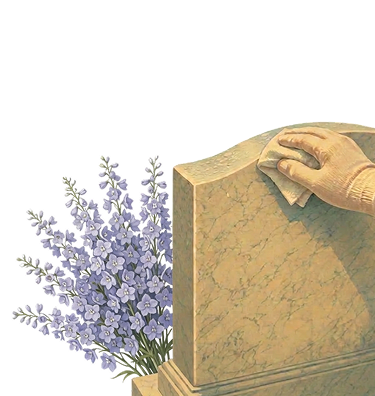
- Taking care of the grave yourself — cleaning the headstone, pulling weeds, tidying up the area. If the stone is in good condition and the letters are still legible, it can be a meaningful hands-on way to show you care.
- Creating a small memorial at home with a framed photo, a candle, and her favorite flowers.
- Donating to a cause she cared about or volunteering in her name.
- Writing her a letter, even if no one will ever read it.
When distance makes it harder
For many families, the hardest part isn't the grief itself — it's the distance. Mom is buried in Florida, but you live in New York. The cemetery is three states away, and you can't make the trip this weekend. Life, work, and kids get in the way. You want to do something, but you don't know how.
And sometimes the situation goes beyond what a family visit can fix. The headstone is weathered, the letters are fading, the base has shifted. You can see it needs professional care, but you're not sure where to start.
That's exactly why we built Tending.
Tending is a grave care service that lets you take care of your mother's resting place — no matter where you are. Before Mother's Day, you can order headstone cleaning, restoration, or a full grave care visit. Our team goes to the cemetery, does the work, and sends you a photo report so you can see the result.
It doesn't replace being there. But it means that on Mother's Day, you'll know her grave looks beautiful — even if you're a thousand miles away.
This Mother's Day
Celebrate the moms who are here. Call them, hug them, take them to brunch.
And for the moms who are gone — remember them. Visit if you can. And if you can't, let us help.
Because Mother's Day was always about both: celebration and remembrance.
Frequently asked questions
What are meaningful ways to honor a deceased mother on Mother's Day?
Common ways include visiting the gravesite with flowers she loved, cooking her signature recipe, gathering family to share stories and photos, tidying the headstone yourself if it's in good condition, or creating a small memorial at home with a candle and photo.
Why was Mother's Day originally about remembrance, not celebration?
Anna Jarvis created the first Mother's Day service in 1908, three years after her own mother's death, specifically to honor mothers who had passed. She started the tradition of wearing white carnations for deceased mothers and red for living ones.
How can I honor my mother's memory if I can't visit her grave on Mother's Day?
If distance makes a visit impossible, a service like Tending can send a specialist to clean and restore the headstone and send a photo report, so you know the grave looks cared for even from a thousand miles away.