Wellington Gypsum Sulfate and Headstone Restoration
Run a hand along the base of an older marker on Derby's east side and you pick up loose grit. The uplands east of the Arkansas Valley lie over Wellington shale with gypsum beds in it, and the shallow water in those beds comes up heavy with calcium sulfate. Granite and marble wick that water in at ground level. Most people searching for headstone cleaning services near me in Derby call after the white bloom has come back for a third or fourth season. Tending's crew draws the salt out with a clay poultice and rinses with low-mineral water. Tending carries a $2,000,000 liability policy and belongs to ICCFA, the industry's leading cemetery and funeral association.

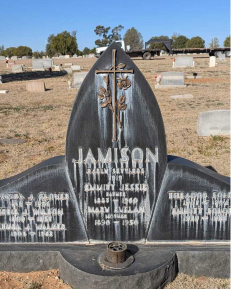
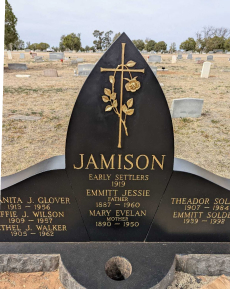
The water dries a few millimeters below the surface and the sulfate turns back into crystal. Those crystals push grains of stone outward from inside the pores. The same mineral load settles into carved letters as a chalky film. It packs into the strokes a little deeper each wet season until a name goes flat from six feet away. We soften the deposit with a chelating agent and lift it out of the grooves with tampico brushes, which leaves the polish on the face untouched. Where the paint fill has already worn out of the carving, gravestone lettering repair puts the contrast back into the inscription. Hard water does this quietly, and it usually gets noticed only when a photograph comes out unreadable.
"Customer service is top notch and the finished work product is excellent. My grandparents headstone is looking like new. Definitely recommend their service"
— Joyce, Tending Client
Arkansas Valley Silt and Headstone Repair
Dig a foot down near El Paso Cemetery and you hit layered silt and fine sand dropped by the Arkansas River. The valley floor is flat enough that surface drainage barely develops, so water stands in place after a storm. Those layers hold moisture in some pockets and drain quickly in others, so a footing set across two of them settles unevenly. The stone tips a degree. The joint at the base opens and the next rain gets into the seam. Tending lifts the monument off its bed, compacts a fresh course of drainage gravel underneath, and sets it back level. Our headstone restoration services cover the pinning and joint repair that follow a lift. The full sequence we work through is laid out in our guide to resetting and leveling headstones.
Branson Cemetery Shade and Bronze Tarnish
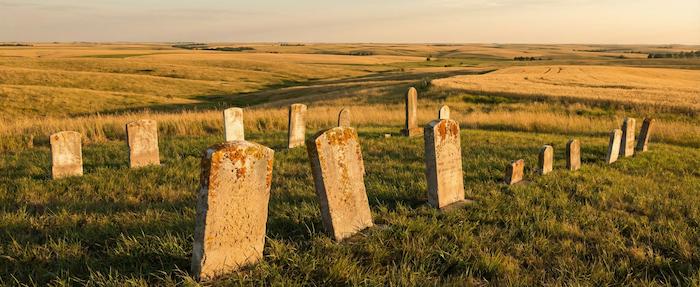
Summers in Derby run hot and humid, and most of the year's rain arrives between May and August. Stones under heavy tree cover at Branson Cemetery stay damp for days after a storm passes. Algae and lichen take the north faces first. The surface turns gray-green, then black, and the black holds heat that dries the stone unevenly. We wet the growth down with a quaternary ammonium biocide, give it time to soak in, and rinse. It dies off and comes back much slower. The same wet air dulls bronze plaques and pulls a patchy green film across the raised lettering, so bronze grave marker cleaning strips the oxide and re-waxes the plate before the next humid stretch.
K-15 De-Icing Salt on Grave Markers
Snow totals stay modest here, with Wichita averaging about 16.7 inches a season. That number hides the real problem. The storms that count here start as rain and freeze on contact, so crews salt heavily. Derby maintains its own two-mile stretch of K-15 straight through town. North gusts past 40 miles per hour carry that brine spray well beyond the shoulder, and chloride lands on stones along the fence line and soaks in. Then the temperature swings. Water in the pores freezes overnight, expands, and lifts thin flakes off the polished face by spring. Tending's technicians flush the chloride out with staged low-pressure rinses. Flat markers near the drive need that flush more often than anything set back from the road.
Service Costs in Derby
The price in Derby is settled before anyone comes out to the cemetery. You choose the monument type and a care plan in our online calculator, and that number is fixed at checkout — no inspection visit is needed to quote the work. Plans cover repeat visits, which carries real weight on the east-side plots where sulfate crust returns on its own schedule.

- Sulfate crust removal: clay poultice draw and low-mineral rinse, repeated across two visits when the bloom runs deep into the pores.
- Monument resetting: lift the stone, compact a new drainage gravel bed, re-pin the joint, and set it level.
- Biological growth treatment: quaternary ammonium biocide soak with a soft rinse, plus tampico brush work on thick lichen.
- De-icing salt flush: staged low-pressure rinses for fence-line and drive-side stones after the winter salting season.