Peat Subsidence and Atlantic Sea Smoke Rime
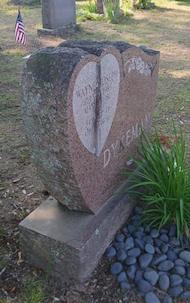
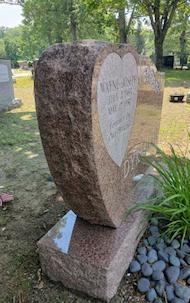
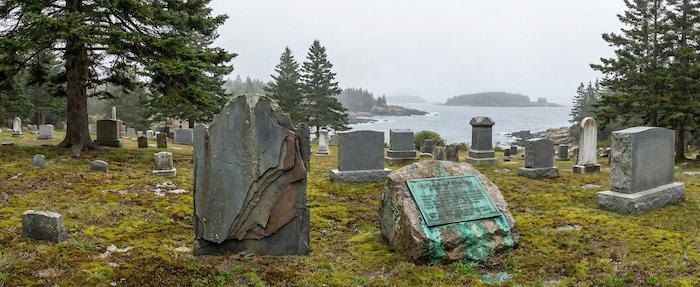
Kennebunk cemetery plots sit on peat-infused coastal loam near the Atlantic Ocean. Winter temperature drops generate freezing sea smoke across the burial grounds. Coastal perimeters contain high densities of Northern white cedar trees. People searching for headstone cleaning services near me locate granite monuments sinking deep into compressing peat or sealed under reddish-black cedar resin. As a professional headstone restoration company, we reconstruct the failed organic foundations and chemically extract the coastal tree sap from the masonry.
Peat-Infused Loam and Monument Subsidence
The York County coastal sub-grade in this sector contains high volumes of decomposing peat. This organic matter lacks structural density. The peat compresses slowly under the 1,000-pound weight of granite monuments. The soil loses total volume. Heavy bases lose bearing capacity, sink unevenly, and tilt at extreme angles. Gravel alone sinks into the soft organic mud.
For permanent leaning headstone repair, we execute a full base extraction. We excavate the compressing peat dirt out of the cavity. We install rigid polymer geo-grid mats at the bottom of the trench. We pack crushed angular quartz directly over the plastic grid. The geo-grid distributes the granite weight across a wide footprint. The quartz locks together. The monument sits firmly plumb. The sinking stops entirely.
Northern White Cedar Pitch and Tannin
Northern white cedars canopy the local burial plots. These specific conifers drop liquid pitch mixed with highly acidic tannins. The sap lands on the flat granite markers. Solar heat cures the liquid into a rigid reddish-black shell. This dark resin traps airborne dirt and obscures the engraved lettering completely.
Standard biological detergents fail against cured resin. Mechanical scraping gauges the factory polish. We deploy caustic terpene solvents. We spray the chemical directly onto the reddish-black crust. The formula melts the resin bond. The hard pitch dissolves into a liquid sludge. We wipe the raw stone clean. We expose the original granite finish without abrasive damage.
Atlantic Sea Smoke and Rime Ice Chlorides
Extreme winter temperature drops over the ocean generate Atlantic sea smoke. The freezing sea fog carries heavy marine chlorides inland. The vapor freezes directly onto the cold granite as rime ice. This process forces liquid salt deep into the rock pores before freezing. The internal salt crystals expand and cause micro-fractures inside the stone matrix.
We deploy thermal desalination poultices. We trowel the thick chemical paste over the granite surface. The poultice reverses the capillary action. It draws the embedded chlorides completely out of the internal rock pores. We scrape the dried clay away. We flush the bare stone with low-pressure water to remove the extracted salt.
"My Angela's headstone had not been cleaned in fifty years. I moved to Florida many years ago and I do visit San Diego, but never was able to get her headstone cleaned. My Angela is in the children's mausoleum chapel. I miss her every day. She was 5 years old when she passed. Well, im telling you after you guys cleaned up her headstone I didn't even remember what it had originally looked like. What a fabulous job! Everyone should use your company. It is truly beautiful. I can't wait for the rest of my family to see it. Thank you so much. Margaret "
— Roberta Silfen, Bangor, Maine
Galvanic Corrosion and Dielectric Isolation
Older multi-tier monuments utilize bronze alignment pins inside the granite blocks. Saltwater moisture penetrates the horizontal mortar seams. The dissimilar metals react chemically with the salt ions. Galvanic corrosion swells the bronze pins rapidly. The physical expansion exerts thousands of pounds of pressure. The force fractures the granite corners completely off the base block.

We hoist the upper granite tiers using heavy steel gantries. We core the corroded bronze pins out of the rock. We install inert stainless steel dowels. We coat the new pins in dielectric epoxy. This coating blocks electrical currents and saltwater moisture. We lower the top block to fuse the structure tight.
Wind-Driven Sand Micro-Abrasion
High coastal winds blow beach sand across the cemetery plots. The silica grains strike the granite face continuously. The physical abrasion degrades the factory polish and creates micro-fissures in the surface. Water enters the raw rock and accelerates winter freeze-thaw damage.
We apply siloxane-based stone consolidants. The liquid chemical penetrates the microscopic abrasions. It cures into a hardened, breathable barrier inside the pores. This application glues the external silica crystals together and blocks future moisture penetration.
Service Logistics and Pricing
We skip the on-site estimates and hidden upcharges. For all cemetery monument maintenance, we operate a flat-rate subscription model based strictly on the size and type of the marker. You check your exact cost instantly using our online configurator. You book the work, and our field crew heads to the cemetery.
- Foundation Replacement: Installing polymer geo-grid mats and quartz gravel to stop peat subsidence.
- Resin Extraction: Using caustic terpene solvents to dissolve Northern white cedar pitch.
- Chlorides Removal: Applying desalination poultices to extract salt injected by freezing sea smoke.
- Galvanic Repair: Coring out corroded bronze pins and installing dielectric epoxy coated stainless dowels.