
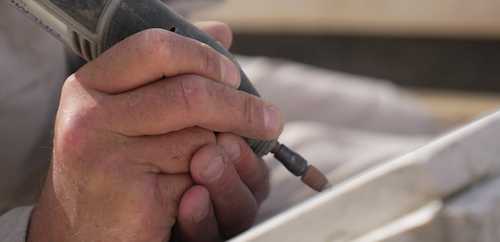
Headstone lettering wears down differently depending on where it sits in Wyoming. Areas near the state's bentonite and trona deposits deal with windblown mineral dust. Everywhere else in the state, a harsh winter freeze-thaw cycle does most of the damage instead. Our breakdown of how the lettering repair process works walks through each stage from start to finish. Every headstone lettering repair job Tending completes in Wyoming is backed by $2,000,000 in liability insurance and the company's membership in the ICCFA.
Bentonite Shale Swelling in Letter Grooves
Wyoming holds some of the largest bentonite clay deposits anywhere, and fine windblown bentonite dust settles readily into carved letter grooves nearby. Unlike ordinary sand, bentonite swells dramatically once it gets wet, and that swelling pressure pushes the paint right out of the groove. The clay hardens into a stubborn plug between rains, then softens and swells again with the next wetting cycle. Families sometimes notice the pattern lines up with a wet spring followed by a dry, sunny stretch. Grooves near an active bentonite operation build up this kind of residue far faster than ones further away. Tending clears the swollen clay completely before any new paint goes in.
Trona Ash Alkaline Paint Attack
Airborne soda ash from the state's trona mining settles into exposed letter grooves on headstones near that industry. Once moisture reaches it, the alkaline dust reacts chemically with the paint binder itself rather than simply drying it out. That reaction breaks down the binder's flexibility, and the paint turns chalky and starts to flake. The same chemistry is why alkaline cleaners strip paint deliberately in other settings, just working slowly and by accident here. Grooves closer to an active trona operation show this consistently more than plots further from it. Tending neutralizes the alkaline residue completely before repainting.
Sagebrush Pollen and Residue Buildup
Big sagebrush grows across most of Wyoming, and its pollen, leaf oils, and dropped needles collect readily inside a nearby carved letter groove. That buildup doesn't chemically attack the paint the way some claim; it mainly holds moisture against the surface and leaves a dusty, uneven stain behind. The trapped dampness can also encourage a bit of mildew or light mold growth over time. It's a nuisance rather than a structural threat, but it still needs clearing before a repaint will hold. Plots surrounded by dense, mature sagebrush see this more than open, cleared sections. Tending clears the residue and any mildew growth before repainting.
High-Altitude Freeze-Thaw Failure
Painted lettering in Wyoming takes a real beating from the cold, regardless of elevation. Any moisture sitting inside a groove freezes solid once temperatures fall, and ice occupies more volume than the water it came from. That expansion works the paint loose from the stone a little more with every freeze. No single winter night does much damage on its own. It is the buildup of repeated freezes, one after another across a whole winter, that eventually shows up as flaking. Cemeteries sitting at higher elevation rack up more of these freeze cycles per winter than valley locations lower down. Before any repainting starts, Tending clears out whatever paint has already worked loose and lets the groove dry completely.
Headstone Lettering Repair Costs in Wyoming
Pricing for lettering repair in Wyoming starts with a set of clear photos showing the groove and the affected lettering. Character count and carving depth decide the figure, not whether the cemetery sits near Cheyenne or clear out by Cody. Those uploaded photos run through the pricing tool, which returns a firm number before any crew gets booked. That holds whatever the underlying cause turns out to be: bentonite grit, alkaline residue, sagebrush buildup, or freeze-thaw damage. Photos of the finished repaint land in the Tending app once the crew wraps up. From there, the family can see the result without a return trip to the cemetery.
- Bentonite grit treatment: swollen clay cleared and the groove repainted.
- Alkaline damage treatment: neutralized residue cleared before repainting.
- Residue removal treatment: pollen buildup and mildew cleared before repainting.
- Freeze-thaw repaint: loosened paint stripped out, groove fully dried, then repainted.
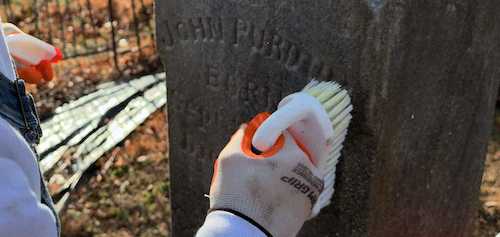
How Our Headstone Lettering Repair Process Works
- Identifying the Groove Condition A technician checks whether bentonite swelling, alkaline residue, sagebrush buildup, or freeze-thaw cycling explains the groove's condition before work begins.
- Clearing the Groove by Hand Swollen clay, alkaline residue, pollen buildup, or old flaking paint gets picked out of the groove piece by piece, continuing until nothing remains but clean stone.
- Testing for Full Dryness The groove has to test bone dry before anything new goes in, since moisture sealed under fresh paint is one of the quickest ways a repaint fails early.
- Packing In Weather-Rated Enamel Once dry, the groove is filled with enamel sized to match the exact depth and profile of the original carving.
- Clearing Excess Paint and Logging the Photos The crew wipes any stray paint off the surrounding stone, then posts finished photos to the Tending app so the family has a record of the work.
