
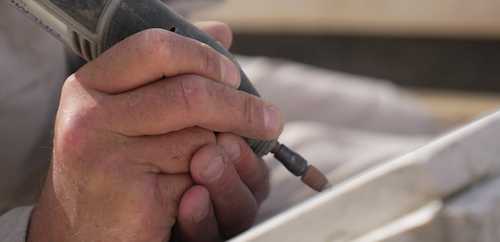
Headstone lettering repair restores engraved names and dates across Arkansas after the original enamel has faded, chipped, or disappeared from the carved grooves entirely. Tending is an ICCFA member and carries $2,000,000 in liability insurance, and pricing and scheduling work the same way no matter which region of the state a cemetery sits in. Every job is booked online instead of through a sales call, and headstone lettering restoration brings the original contrast back into the stone without replacing the marker itself.
Repeated Wet-Dry Cycling in the Ouachita Mountains
The Ouachita Mountains in west-central Arkansas get roughly 58 inches of rain a year, well above the roughly 45 inches the drier Ozark Plateau sees to the north. That extra rainfall doesn't fall as one long soak. It arrives in repeated storm cycles, and each cycle pushes moisture into a carved letter, lets it dry partway, then wets it again days later. Enamel that has already thinned from age and UV exposure tolerates one wetting far better than dozens across a season; the paint layer cracks along its edges and starts lifting away from the granite instead of staying bonded to it. Tending's crews see this pattern most often on markers set among the region's folded sandstone and shale ridges, where drainage around the base runs slower than on flatter ground. Repair starts by clearing what enamel remains rather than painting over a cracked layer, since fresh paint applied on top of failing paint just fails again within a season.
Statewide Humidity and Mold Inside Empty Grooves
Technicians describe humidity as the constant background threat across the whole state, not just a summer nuisance in one region. Arkansas's humid subtropical climate keeps a carved groove damp for long stretches rather than letting it dry out quickly between rains, and once the enamel has already failed and a letter sits open to the air, that trapped moisture is exactly the condition mold needs to take hold. A mold-darkened groove is a different repair job than a simply faded one — the mold has to be cleared and the stone dried completely before any new enamel goes in, or the paint fails again within months. Retail spray paint makes this worse: it bubbles and lifts where it sits over damp or uneven stone, and it can bleed into the surrounding granite pores, leaving a dark stain around the letter that outlasts the paint itself. A closer look at how enamel fails inside a carved letter over time is in the headstone lettering restoration guide, and it's part of why the process below includes a dedicated drying stage rather than moving straight from cleaning to enamel.
Delta Flooding and Prolonged Dampness
Cracked lettering in the Delta rarely comes from a single flood event. The lowland counties of eastern Arkansas sit flat against the Mississippi River, and when water rises, silt and standing moisture can press against a low, flat marker's carved letters for days before the ground fully drains. Enamel that's already worn thin from UV exposure re-wets and dries out repeatedly through a season like this, instead of just drying once between ordinary rains, and each cycle adds more stress to a bond that was already weakening. The heavy clay soil common across the Delta also drains more slowly than the rockier ground in the Ouachitas, which is part of why moisture damage in flat markers here tends to run deeper into the letter by the time someone calls. If the same monument also carries a bronze veteran or memorial plaque nearby, that's handled separately under Tending's bronze marker restoration service, since bronze corrodes through a different chemical process than enamel fails.
Headstone Lettering Repair Costs in Arkansas
Pricing is based on the character count of the inscription and the depth of the carved grooves, not on the size of the plaque or how far the cemetery is from a city. A short epitaph in shallow lettering costs less to clear, dry, and repaint than a long inscription carved deep into hard granite, and that's the actual driver of price — not travel distance or region. The exact number comes from the online calculator at /pricing/, and it's the same fixed price whether the marker sits in the Ouachita foothills or the Delta lowlands. No on-site inspection is required before a family gets a number; photos of the lettering are usually enough to scope the job, and anything that needs a closer look gets confirmed before work starts, not after a technician has already driven out. Once the repair is finished, the crew uploads a close-up photo report through the Tending app so the family can see the new lettering without visiting the cemetery in person.
How Headstone Lettering Repair Works
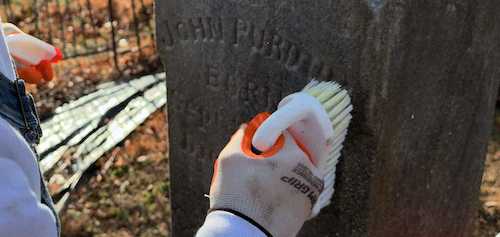
- Clearing the Grooves A technician clears the old, cracked enamel and any built-up dirt or mold out of each carved letter by hand, working down to bare granite so nothing from the failed coat remains.
- Degreasing the Stone A solvent pass dissolves grease, dust, and leftover paint residue inside the groove, leaving a clean surface the new enamel can actually bond to.
- Full Drying The stone is force-dried rather than left to air-dry, since Arkansas's humidity can keep a groove damp for hours on its own. Painting over residual moisture is the most common cause of repeat failure.
- Repainting the Grooves Industrial-grade enamel is applied directly into the dry, cleared groove, matched to the letter's original depth and the stone's lettering style.
- Polishing & Photo Report Excess enamel is polished off the surrounding granite so only the letter itself holds color, and the family receives a close-up photo report through the Tending app.
