
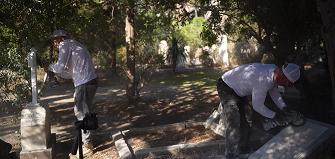
Ground movement causes most of what looks like headstone damage in California, not the stone failing on its own. Earthquakes shift plots along the coast, and drought-driven groundwater pumping sinks parts of the Central Valley by feet at a time. Tending handles headstone repair and restoration statewide, using the same process regardless of what caused the movement. The goal of headstone restoration here is always the same: a stable, level monument, not a cosmetic quick fix. Crews coordinate with cemetery staff directly, and every visit falls under a $2,000,000 liability policy and ICCFA membership.
Bay Area Seismic Activity and Foundation Damage
A moderate earthquake can shift a granite monument several inches off its base in one jolt. The granite itself rarely cracks. The damage happens underneath, where repeated small shifts loosen the foundation over years. Cemeteries near the Hayward and San Andreas faults see this pattern more than once a decade in some plots. A monument that survived last year's shaking standing upright can still be sitting on a compromised base today. The lean from that kind of damage can take months to become visible. Foundation alignment gets checked here after any known seismic event, as part of routine care.
Central Valley Ground Subsidence and Uneven Settling
Releveling visits happen on a shorter cycle in the San Joaquin Valley than almost anywhere else Tending works in California. The reason traces back to groundwater. Decades of pumping have compacted clay layers deep underground, and in drought years parts of the valley floor sink more than a foot annually. Cemetery ground follows that sinking unevenly. Flat markers tilt, upright monuments pull away from their bases, and no two plots move at exactly the same rate. A stone that was level five years ago can be noticeably off today without a single crack in the granite. Hydrologists call the worst spots subsidence bowls, and they tend to deepen through a drought and ease off somewhat once the rain returns.
Sierra Foothill Frost Heave and Foundation Lean
A slow, barely noticeable lean is the most common complaint Tending hears from families with plots in the Sierra foothills. Winter freezes are usually behind it. Water trapped in the soil beneath a monument's base ices over, pushes the foundation up slightly, then settles back unevenly once it thaws. Repeated across enough winters, that cycle works a stable base loose. Century-old plots near Placerville and Grass Valley often show this kind of gradual tilt, sometimes for years before anyone notices. Deciding between a full reset and a minor releveling comes down to what the base and surrounding soil actually show.
Southern California Expansive Soil and Cracked Foundations
Cracks along a monument base in the Los Angeles basin rarely trace back to one bad storm. Expansive clay soil underlies much of the basin, and it swells noticeably once winter rain finally arrives after a dry summer. That swelling pushes against foundations unevenly. Different sections of the same plot hold different amounts of moisture, so some parts of a base move more than others. A monument can develop a lean over several wet seasons without anyone ever seeing it move. Tending treats the soil condition here first, then resets the stone once the ground underneath is actually stable. Resetting the stone without addressing the soil rarely holds for more than a year or two.
Structural movement sometimes brings a second problem along with it. If lettering has cracked or faded during the shift, headstone lettering repair covers that separately. If a bronze plaque on the same monument has corroded, bronze marker restoration handles that. Our guide to the full restoration process covers foundation assessment and structural stabilization in more depth.
Headstone Repair Costs in California
Pricing for headstone repair and restoration in California depends on the type of damage and the size of the monument, not a flat regional rate. Enter both into the online calculator for a fixed number before any work is scheduled. A hairline crack costs less to stabilize than a full releveling or reset, and the calculator reflects that difference automatically. There's no in-person estimate needed just to get a price. Materials, labor, and lifting equipment are all included in that number, and photo updates come through the app once the work is finished.
How Our Headstone Repair Process Works
- Technical Assessment A technician evaluates the monument's geometry, foundation condition, and the soil underneath before any tool touches the stone. Even a slight tilt can mean internal stress the naked eye won't catch.
- Foundation & Base Repair Cracks, delamination, or moisture damage in the base get addressed before the stone above it is touched. A compromised foundation makes any repair above it temporary.
- Lifting & Realignment The monument is lifted with proper equipment and reset on stable ground. It's never forced back into place with a crowbar or by hand.
- Crack & Chip Repair Any cracks or chips in the stone itself get stabilized to stop the damage from spreading further. A cosmetic filler alone won't do that.
- Sealing & Photo Report A breathable protective sealant goes on to slow future moisture damage. Photos of the completed repair land in the app the same day.
