
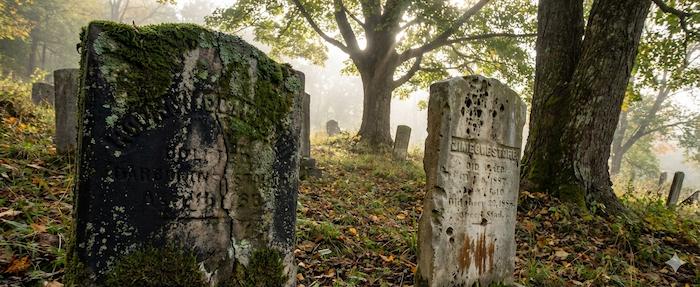
A headstone above an old West Virginia coal seam can sink or crack years after the mine underneath it collapsed, long after anyone remembers the tunnels were ever there; a bronze veteran's plaque along the Kanawha River near a coal-fired power plant corrodes from decades of fly ash instead, with no mine subsidence involved. West Virginia's 3,482 cemeteries sit above generations of coal mining history, and every Tending headstone cleaning visit among them carries the same $2,000,000 liability policy and ICCFA membership. Which fix actually helps a West Virginia headstone depends on what's really behind the damage.
How West Virginia's Coal History Shapes Headstone Care
Abandoned coal mines can let the ground above them settle or collapse decades after the tunnels went quiet, undermining monuments with no warning. Fine coal dust from mining and processing packs directly into engraved letters statewide, and coal-fired power plants along the Kanawha River left bronze markers nearby with their own fly ash residue.
West Virginia Mine Subsidence and Headstone Repair
West Virginia has mined coal for close to 150 years, and much of that coal came out through underground room-and-pillar or longwall methods that leave the ground above riddled with empty tunnels and voids. Longwall mining in particular is designed to let the rock ceiling collapse behind the cutting machine on purpose, and the ground surface above eventually settles to match whatever void opened up hundreds of feet below. The settling doesn't happen all at once or on any predictable schedule, and a cemetery sitting above old mine workings can go decades without visible movement before a section of ground finally drops. Forty of West Virginia's counties require mine subsidence coverage as a standard part of homeowners insurance, which gives some sense of how routine the problem is across coal country. A monument above a subsiding section can crack its base, sink unevenly, or tip as one side of the ground beneath it settles before the rest catches up. Southern coalfield counties like Logan, Mingo, McDowell, and Boone carry the densest concentration of old underground workings, so cemeteries there face the highest odds of eventually sitting above an affected section. Tending excavates down to solid, unaffected ground and rebuilds the foundation on a base that isn't tied to whatever is still settling underneath it. Headstone repair over old mine workings gets checked again periodically, since subsidence in a mined area can resume years after the ground first seemed to stabilize.
West Virginia Coal Dust and Headstone Lettering Repair
Coal processing and transport send fine coal dust drifting over cemeteries near active and former mining operations throughout the southern coalfields. The dust packs directly into engraved letters, since a carved groove is exactly the kind of low spot windblown particulate settles into first. A light rain mixes the dust into a dark, gritty paste that fills the groove and dries hard within a day or two of sun exposure. A name that was legible before a heavy dust season can disappear behind packed coal grit within a single year near an active loading facility. Scraping the packed dust out with a metal tool digs into the surrounding granite just as easily as it digs into the dust itself, leaving permanent scratches next to whatever letter someone was trying to clear. Soft brushes combined with a gentle degreaser lift the packed dust out of each letter without any metal tool ever touching the stone. Headstone lettering repair repaints whatever letter the coal dust had obscured once the groove is fully clean.
Kanawha Valley Coal Power and Bronze Marker Restoration
The John E. Amos Power Plant has run along the Kanawha River near Winfield since 1971, burning roughly 26,000 tons of coal a day and standing as the largest generating station in the American Electric Power system. Decades of fly ash particulate from that plant and others along the Kanawha Valley settled over nearby cemeteries, and bronze veterans' plaques absorbed a steady coating of it. The particulate bonds into a dull, gritty film over the metal's original patina, and the film only grows thicker as each new decade of plant operation adds to it. A plaque with decades of fly ash exposure can lose most of its contrast, leaving a name and rank hard to read under the accumulated buildup. An industrial-strength degreaser breaks the film down chemically, and the crew regrinds the raised lettering back to bright bronze before repainting the recessed background. Bronze marker restoration finishes with a fresh clear coat, giving a plaque near the Kanawha Valley's power plants a clean surface again.