
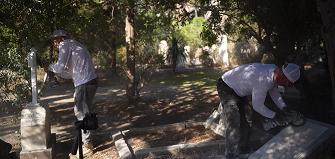
A cemetery footing in Wisconsin runs into different trouble depending on the ground underneath it. Central sand-plain counties deal with soft organic soil left behind by old bog margins. The rest of the state deals mainly with glacial till and its winter freeze cycle instead. Our breakdown of the headstone restoration process covers each stage a repair actually goes through. Tending carries $2,000,000 in liability insurance on every headstone repair job here, and holds membership in the ICCFA.
Central Sand Plain Muck Soil Settling
Wood, Monroe, and Jackson counties sit near Wisconsin's cranberry-growing lowlands. Cemeteries in this part of the state often rest on pockets of soft, poorly drained organic muck left over from old bog margins. That soil compresses unevenly under the steady weight of a concrete footing. The settling shows up as a gradual tilt rather than a sudden drop. Soil surveys mark this kind of ground as muck or peat. It behaves the same way under a monument as it does under any other structure. Tending excavates down past the compressible layer and builds the new base on firmer soil underneath.
Glacial Till Frost Heave
Much of Wisconsin sits on clay-rich glacial till left behind by the last ice age, and that soil holds water close to the surface. Winter freezes that trapped water solid, and the ice expands and lifts whatever footing sits above it. The ground rarely settles all the way back down before the next freeze arrives. A shallow footing tilts a little more with each passing winter as a result. Kettle Moraine cemeteries and plenty of others across the state see this every year. Tending rebuilds the footing below the frost line so the cycle can't repeat.
Ground Squirrel Burrow Settling
Thirteen-lined ground squirrels favor exactly the kind of short, mowed grass that surrounds most Wisconsin cemetery plots. Their burrows run narrow and only a few feet deep, but a dense colony can honeycomb the soil around a shallow footing over several seasons. The loosened ground beneath and beside the footing settles unevenly rather than dropping all at once. Established colonies near older, shallow-set monuments cause this more than newer plots with deeper bases. The pattern is common enough that Wisconsin cemetery caretakers often mention it as a routine, low-grade nuisance. Tending fills the loosened ground and rebuilds the footing on solid soil.
Black Walnut Root Intrusion
Black walnut trees are common around older Wisconsin cemetery grounds, and their roots spread wide and shallow rather than growing straight down. A root running beneath a stacked monument thickens with each growing season. That steady growth works like a wedge against the joint between the base and the die. Given enough years, the wedging pressure separates the blocks or cracks the mortar holding them together. Plots close to a mature walnut's canopy see this far more than open, tree-free sections. Older, established plantings around a cemetery's original section create this risk most consistently. Tending removes the intruding root and repairs the joint before resetting the stone.
Headstone Repair Costs in Wisconsin
Pricing for headstone repair in Wisconsin starts with a set of submitted photos, not an in-person visit to the cemetery. What actually drives the number is the extent of the damage rather than the county the cemetery sits in. A muck-settled footing near Wisconsin Rapids costs the same to fix as a frost-heaved one near Fond du Lac. That holds true whenever the scope of work matches. Run those photos through the pricing tool for a figure ahead of scheduling. The crew uploads photos of the finished repair to the Tending app once the job is done, so the family can see the completed work.
- Muck soil settling repair: footing rebuilt below the compressible soil layer.
- Frost heave footing rebuild: new footing set below the frost line.
- Burrow settling repair: loosened ground filled and the footing rebuilt.
- Root intrusion repair: intruding root removed and the joint repaired.
How Our Headstone Repair Process Works
- Inspecting the Footing and Soil A technician checks whether muck settling, frost heave, burrow damage, or root intrusion explains the movement before any work starts.
- Excavating the Failed Base The compromised footing is dug out completely, along with whatever soft soil, loosened ground, or root material caused the failure.
- Setting the Monument to the Side Rigging matched to the stone's weight lifts it clear, opening up room to rebuild the footing properly underneath.
- Rebuilding Cracked or Separated Stone A color-matched compound stabilizes any cracking or block separation, restoring strength rather than just appearance.
- Final Weatherproofing and Photo Upload A breathable sealant protects the finished repair, and photos go up on the Tending app once the monument is reset and level.
