
What Happens to a Grave When No Family Is Left to Care for It?
A grave with no living family is not cleared away or handed to someone else. If the cemetery has a perpetual care fund, the grounds around it usually keep getting mowed, but no one cleans, resets, or repairs the headstone unless someone arranges it. State reclamation laws cover only unused grave spaces, and only after a set period without payment or contact plus formal notice. An occupied grave generally stays a grave.
Most graves are looked after by someone, a spouse, a child, a distant relative who visits once a year. But not every grave has that. Sometimes the direct family has died out, moved away, or simply lost track of where an ancestor is buried generations later. What actually happens to that grave depends on a mix of cemetery policy and state law, and it's rarely as simple as “nothing.”
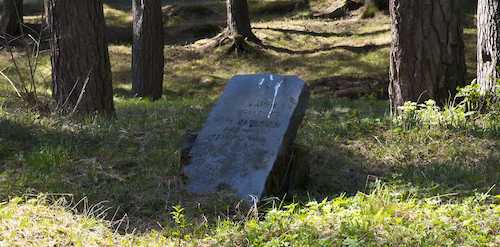
Who Is Responsible for a Grave When There Is No Family?
In most cemeteries, the first line of responsibility isn't a person at all: it's the perpetual care fund, if the cemetery has one. When a plot is sold, many states require the cemetery to place a portion of that sale, with the exact percentage set by state law, into a trust used to keep the grounds mowed and maintained indefinitely, regardless of whether anyone from the family ever visits again.
That coverage isn't universal, though. A meaningful share of cemeteries, particularly small church, religious, fraternal, or family burial grounds, are exempt from state perpetual-care requirements entirely. And even where a fund exists, it's typically built to cover general grounds upkeep, not the individual headstone itself: cleaning, resetting, or repairing a specific monument usually falls outside what perpetual care pays for, family or no family.
Does the Cemetery Maintain Abandoned Graves?
Often, yes, at least at the level of mowing grass and keeping the section from becoming completely overrun, if a functioning perpetual care fund is in place. What a cemetery generally won't do on its own is clean, straighten, or repair an individual headstone just because no family remains to ask for it. That kind of care has always depended on someone actively requesting or arranging it, whether that's a relative, a volunteer, or a hired service.
Cemeteries that are still active businesses, with income from ongoing plot sales, tend to keep up general maintenance better than small, historic, or defunct cemeteries with no new sales coming in and a perpetual care fund that was never adequately funded to begin with.

What Happens to Abandoned and Forgotten Cemeteries?
Without an income stream or an engaged owner, a cemetery can slide into real neglect: overgrown vegetation, leaning or toppled stones, and inscriptions that fade past the point of easy reading. States have reclamation and abandonment laws to address exactly this, but the timelines vary enormously, from one year of unpaid charges in some cases to 50 years without contact in others. Every one of these processes requires formal notice first, typically certified mail to the last known address and a published notice if the owner can't be found, not a quiet, unilateral decision by the cemetery. The table below compares how four states handle it.
| State | What can be reclaimed | When it can be reclaimed | What has to happen first |
|---|---|---|---|
| Connecticut Conn. Gen. Stat. § 19a-307 | The unused portion of a lot in a town or nonprofit cemetery | After 1 year of unpaid assessed charges for contracts signed on or after July 1, 2018; after 10 years for older contracts | Notice by registered or certified mail; the space can be taken over if charges stay unpaid 6 months after notice. After costs, the balance goes to a perpetual care fund. |
| Arizona A.R.S. § 32-2194.33 | Unused property in a licensed cemetery, but not a space where a memorial marker has been placed | When the owner hasn't given the cemetery a current address for 50 consecutive years and can't be reached by certified mail | A newspaper notice once a week for two weeks. The cemetery must set aside 10% of the reclaimed property for former owners or their heirs. |
| Florida Fla. Stat. § 497.286 | Unused burial rights in a licensed cemetery | When the owner hasn't given the cemetery a current address for 50 consecutive years and can't be reached by certified letter | The cemetery certifies the facts to the state, which publishes notice before the rights can be sold |
| Texas Tex. Health & Safety Code § 714.003 | An unoccupied plot in a private cemetery run by a nonprofit | After 10 consecutive years in which the owner doesn't keep the plot up to the standard of neighboring plots, or doesn't pay maintenance charges | A court has to find the plot abandoned. After expenses, sale proceeds go to an account for the cemetery's care. |
Summarized from each state's statute as of October 2026. Laws change, so check the current text or the cemetery office before relying on a specific timeline.
Before assuming a grave is truly abandoned, it's worth exhausting the research steps for tracking down a lost or forgotten family grave, since “no one has visited in decades” and “no family exists” are not the same thing.
One important distinction cuts across all of this: reclaiming an unused portion of a plot is legally different from disturbing a grave where someone is actually buried. An interment generally takes that specific space out of the abandonment process entirely, even if the rest of the family plot around it is untended. Sometimes what looks like an abandoned cemetery turns out to be a family plot that was simply lost track of rather than truly ownerless, which is exactly what happened in one Texas family's case, where a single known grave turned out to be an entire forgotten family cemetery once the site was properly cleared and examined.
Can Someone Who Isn't Family Care for a Grave?
Generally, yes, at least for visiting and tidying up. Most cemeteries don't ask for proof of family relation from someone who wants to visit a grave, clear debris, or leave flowers. Cleaning or repairing the headstone itself is a different step: the monument usually belongs to the plot owner or their heirs, so a cemetery may ask for their authorization, or give its own approval when no owner can be found. Cemeteries can set their own rules about outside contractors and permitted work, but those rules exist independent of whether the person asking is related to the deceased.
This is exactly the gap that historical societies, genealogists, and independent volunteers regularly step into for graves that have no living family attending to them at all.

What Is “Adopt a Grave” and How Does It Work?
“Adopt a grave” isn't one official, nationwide program; it's a general practice used by historical societies, genealogical groups, and volunteer organizations to informally take responsibility for a specific grave or an entire neglected cemetery. In practice, that can mean anything from a local group periodically clearing overgrowth and documenting a historic burial ground, to an individual volunteer through a site like Find a Grave photographing a memorial and keeping its listing updated so the record itself doesn't disappear even if no one visits in person.
Because there's no single governing program, the specifics (what's allowed, whether the cemetery needs to approve it, how formal the arrangement is) depend entirely on the individual cemetery and the group involved. Asking the cemetery office directly is the starting point either way.
Can a Grave Plot Be Resold or Reused in the US?
This is the question with the least uniform answer, because it depends heavily on state law and on whether the space in question actually holds a burial.
An unused portion of a purchased plot, one where no one has ever actually been interred, can in some states eventually be reclaimed and resold, but only after a set period of non-payment or no contact (state timelines range from as little as one year of unpaid charges to 50 years without contact) and only after a formal legal notice process, not simply because a family disappeared. Depending on the state, part or all of the proceeds from a legitimate reclamation has to go toward the cemetery's long-term care rather than anyone's private profit.
An actual occupied grave is a different matter entirely. Once an interment has taken place, that specific space is generally excluded from abandonment and reclamation law altogether. Reuse of an already-occupied grave is essentially reserved for extraordinary circumstances, such as a whole cemetery being relocated under government authority, not for routine reclamation because a family can no longer be reached. In practice, a grave that's actually been used stays a grave, regardless of whether anyone is left to visit it.
If You're the Family That's Still Here
Everything above describes what happens when family truly isn't in the picture anymore. Far more often, the family does still exist, they're just far away, out of touch with the cemetery, or unsure whether anyone else is handling it. If that's closer to your situation, there are practical ways to keep a distant grave cared for without needing to live nearby or visit in person. Tending, for example, coordinates with the cemetery, carries out the cleaning or restoration, and sends a before-and-after photo report after each visit, so a family grave can be looked after from anywhere in the country.
Frequently asked questions
Who is responsible for a grave when there is no family?
Day-to-day, it's the cemetery, specifically its perpetual care fund if one exists and is adequately funded, which generally covers basic grounds upkeep rather than individual headstone care. Beyond that baseline, responsibility for actively tending the grave falls to whoever chooses to take it on, whether that's a volunteer, a historical society, or a hired service.
Does the cemetery maintain abandoned graves?
Often at a basic level, mowing and general upkeep, if the cemetery has a functioning perpetual care fund. Cleaning, straightening, or repairing a specific headstone is a different matter and typically isn't something a cemetery does proactively on its own, family or no family.
What happens to abandoned and forgotten cemeteries over time?
Without income or an engaged owner, they tend to become overgrown and neglected. States do have reclamation laws, but they apply to unused grave spaces, and the waiting periods vary widely: from one year of unpaid charges for newer Connecticut plot contracts to 50 years without a current owner address in Arizona and Florida. All of them require formal notice first, and occupied graves are generally outside these laws regardless of how long they go unvisited.
Can a grave plot be resold or reused in the US?
An unused, never-occupied portion of a plot can sometimes be legally reclaimed and resold after a set period without payment or contact, and part or all of the proceeds usually has to go toward the cemetery's long-term care. An actual occupied grave is a different case: reuse of a space where someone is already buried is generally not permitted outside of extraordinary circumstances such as a government-authorized cemetery relocation.
Can someone who isn't family care for a grave?
Usually, yes. Anyone can generally visit a grave and tidy it, and volunteers and historical societies often look after graves with no living family. Cleaning or repairing the headstone itself is a separate step: the cemetery may ask for permission from the plot owner or heirs, or give its own approval when none can be found, so it's worth checking with the cemetery office first.